Showing posts with label Book Discussion. Show all posts

Sunday, 27 July 2014

Should you decide not to read the book based on the film?

Today I went to see The Fault In Our Stars with my friends. This film was originally my suggestion as even though I hadn't read the book I had heard a lot about it. I knew that I wouldn't get around to reading the book before I saw the film and reasoning that the book is always better I decided that it wasn't such a problem. That is until I saw the film.

I know that it's about cancer and two teenagers falling in love and I fully expected to cry. However, I was never once moved to tears or even close. I left the cinema feeling completely devoid of emotion and not in the way that a film can leave you feeling numb because it has had such an impact on you. I just never believed in the scenario, I was never invested in the characters or the love story. 

Augustus Waters I found to be cocky and arrogant, yes, but from the outset it seemed to me that he was in fact just a scared little boy who was frightened to die. Well of course he was! That would have been fine if I didn't think that the film worked so hard to deny that. When Gus' cancer comes back with a vengeance and he loses his smart-Alec attitude I believed it. That was the moment that I was the most invested in the story, but it didn't last for very long. 

Hazel's eulogy to Gus, her original one, left me completely cold. From the first moment it seemed that Gus was determined that Hazel was going to be his girlfriend and I didn't like that. For me, it made everything that happened afterwards forced or shallow and not very organic. I can believe that they were best friends and so the grief is believable enough. I thought the eulogy that Hazel read out at the funeral was dishonest. The voice-over clearly states that she didn't believe a word and I think that's the problem with a lot of the gestures and statements made in the film: they were empty. 

The smoking 'metaphor' is also something that I just didn't get and thought was very pretentious. This coupled with all of the reasons above meant that I just didn't enjoy the film very much and was quite unmoved by it. However, that was just the film and I am sure that many fans of the book will be disappointed with the film as well. So I ask you, do I still keep this book on my mental TBR? 

Friday, 25 July 2014

Fifty Shades of Grey Trailer Discussion

Mr Grey will see you now. Oooohh, chilling. If you live in the English-speaking world and are over the age of 18 then you have probably heard something about E.L James' Fifty Shades of Grey. You know, it's those books that are naughtier than your Nan's Mills and Boon stash. I read the Fifty Shades Trilogy (Fifty Shades of Grey, Fifty Shades Darker and Fifty Shades Freed) back in the summer of 2012 and I have to say I was hooked. They had an obsessive quality about them and they launched me into the genre now called New Adult. These books got me through some pretty tough spots in my final year at uni and so hold a special place in my heart. 

E.L James' books challenged me in ways that I had never been before. The deeply patriarchal nature of her books had me pacing around my room trying to figure out what my enjoyment of them meant for me and my feminism and I have to say it is a dilemma that I haven't quite worked through yet. Romance and feminism is one hard road to navigate, but BDSM romance and feminism is just a mind-f**k! At the time of reading the books, I liked them and somewhere on a memory stick I have some writing exploring what I think which I will have to dig out and upload here, but maybe I'll wait until the film comes out.

Now to the real reason for this post. The film adaptation global trailer was released yesterday and as you would expect has caused quite a buzz. I liked it. The way that it is shot just looks stunning and from what I can gather it seems a fairly faithful interpretation. I know that a lot of people have taken issue with the two actors cast as Ana and Christian, but all I have to say to that is they've been cast for ages. It's time to accept and move on. 

I'll admit there are some moments that are cringe worthy. Erm... "Look at me" "I am". Surely those who have read the books expected this? Those moments punctuate the original narrative and they are of course there to make all the women blush and giggle in the cinema and any male partners to be confronted with the ultimate mainstream female fantasy. I'm already rolling my eyes in anticipation of these moments.

That said, I am looking forward to seeing the film. It seems like the perfect girls night out movie. After the film we can all have a few glasses of wine and talk openly about sex because Fifty Shades made it possible. If there is one thing that I like about this franchise it's that. It is that thanks to these books women felt liberated to not only talk about sex, but talk about all manner of desires and fantasies without shame or censor. I really admire that and look forward to the explosion of comment that will undoubtedly take place once the film is officially released on 14th February next year. 

If you haven't seen it already. Here is the infamous trailer: 


P.s. I love this version of Beyonce's song. 

Saturday, 3 May 2014

Are You Ever 'Too Old' for Teenage Fiction?

Last year after a recommendation from For Bookssake I started reading my copy of Girls in Love by Jacqueline Wilson. I harboured this book for years having got it as part of a VHS bumper pack of the TV show ten years ago! I loved the show, but I never quite got around to reading the series back in the day. I had tackled Tracey Beaker and the Suitcase Kid, but was starting to believe that I was growing out of these kinds of books. What can I say? Reading books about 14-year-olds just wasn't cool when I was 15.

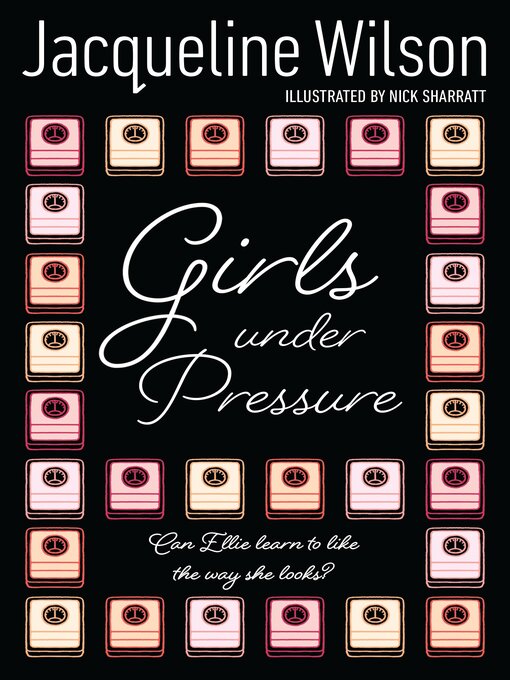
Last month I decided to tackle the second in the series: Girls Under Pressure. This is an incredibly relevant novel about the pressures that young girls go through in terms of the way they look and dress. In the book each girl tries to drastically change themselves in order to try and confirm to the idea of what they think everyone is telling them is acceptable for them to look like. Magda is sexually assaulted, blames herself and reacts badly by cutting off her hair and shunning her usually glamorous clothing. Nadine turns her back on her gothic look in order to try and fit in at a magazine photo shoot in the pursuit of a career in modelling. However, the series' protagonist Ellie has a particularly harrowing time as the belief that she is fat drives her to anorexia and bulimia. I was thrilled when at the end of the book all three of the girls found that they were just perfect as they were and it was an uplifting message to end on as pressure sadly doesn't disappear once you enter your twenties.

This got me thinking about how this book might appeal to adults and if teenage fiction still has relevance and value for adult readers. I think in the case of the girls series the answer must be a resounding yes. The problem is that we have a tendency to think about literature for younger readers as 'less' than literature for adults. Just look at the often dismissive and condescending way in which YA fiction is dealt with. I have to defend teenage and young adult fiction here because I believe that those labels can in fact be harmful. Let's be honest, 'adulthood' is no fixed thing and legally you become an 'adult' whilst still a 'teenager'. With this in mind it is easier to understand that books too aren't going to fit into neat categories nor are they going to stop being relatable just because you have another birthday.

The Girls series would have been really helpful when I was still a teenager, but it still does something for me now. So, are you ever 'too old' for teenager fiction? No because there is no such thing as 'teenage' fiction. Books are for everyone, everywhere and shouldn't be limited by how they were marketed. In addition to this, how can you be 'too old' when ages are just made up numbers? Age is arbitrary and we are all different which means that we will all want, need and be different things at different times. If I have learnt anything through writing this blog it's that with books, as with life, we should never limit ourselves and I think Ellie Allard would agree. 

Thursday, 1 May 2014

The Price of Ebooks

How much would you pay for an ebook? Recently I have noticed that an increasing number of books are only available in ebook format and have also come with an increased price tag. The beauty of books is that they are not just stories, they are objects. We can buy the beautiful cloth bound covers for lots of £££ or stick to our bargain basement copies at charity shops and swap sites. This way it is largely the reader who is in control of the price they pay for a particular book or to a certain extent determine what it is worth. Of course readers don't set the recommended retail prices, but there are always cheaper alternatives to be found with paper books. With ebooks this is just not possible. How would we go about downloading a second-hand copy of an ebook? How many of us can borrow electronic versions from our libraries? Granted that this may be possible in the future, but not for right now. The price of an ebook is the price that the website says. I am an avid shop-arounder and let me tell you whether you buy from Kobo, Kindle or iBooks, ebook prices are worryingly uniform.

Knowing then, that you have to pay that set price for an ebook, how do we decided what is reasonable? Usually we associate cost with the amount of labour that has gone into making something. For instance, we are more willing to pay higher prices for something that has been stitched by hand instead of on a machine. How do ebooks fit into this? Who are we paying when we buy an ebook? We aren't paying the sales assistant who has had to unpack, shelve and then sell the book to us. We aren't paying the lorry driver who delivered it to us, nor the warehouse worker who packed it nicely in the boxes. Not even the people who work in book-binding to get all the pages in the right order for us. The truth is all of the manual labour that is present in the production, distribution and selling of books is absent when it comes to their electronic counterparts. Now this isn't a rant about how ebooks will put people out of jobs, but a look at how the money that we pay for these products doesn't go to quite as many people as paper copies. Yes there are still people who work on editing and publicity and getting the book to online distributors, but don't all of these job roles exist anyway? That's not to mention the author who had to write the books. The sad truth is that unless self-published not an awful lot of money goes to those who write what we read regardless of book format.

I'm all for fair pricing. I like to buy new books by emerging authors at full price to offer my support. I like to purchase a mixture of paper books and ebooks and I love the opportunity for increasing people's access to books and reading. I do not, however, like that publishers and book retailers are exploiting new technology in order to exploit us. Simply put I can find no reason for ebooks to cost more that £5 and even then that's on the expensive side. It's ok for higher quality products to be more expensive, but it is not ok for them to be over-priced i.e. priced more than they are worth. Who am I to decide how much a book is worth? Well, I'm the reader. Aren't I the only one who can determine that? 


Sunday, 27 April 2014

Self-imposed Proscribed Reading?

A couple of weeks ago I got overly excited about what I was going to read during these past two weeks as it's the school Easter Holidays and I had a little more time in my hands than I usually do... at least I thought I did. I had a lot of catching up to do with friends and family during this time and spent 10 days without my computer during that time and so although I was buying books I wasn't writing about them. 

I have a fair few unread books and so I have been using my book jar to work my way through them. Usually when I do this it is just one at a time, but I had to plan to take books away with me on a recent trip to Sheffield and so I picked out a few more than normal. However, a couple that I had initally picked out I couldn't find and so picked more, plus I didn't read as much as I had imagined I would. Now I have titles picked out that I haven't read. This leads me to a little bit of a dilemma. Do I now have those book as the ones that I will read next or do I put them back into the book jar and move along as usual?

One of the things that I just couldn't get on with at university was the prescribed nature of the reading list. I basically knew what I had to read for the 9 months of classes until the summer and even then I was expected to use the summer to read my next semester's load of books. I understand that I did something similar with the book jar in that I read the book that I have picked out, but as I say that is usually very short term and it is only when I am overwhelmed by choice. As I have recently begun a bit of a Jane Austen binge in all mediums but books and am taking part in a World Book Night Book Swap, I feel as though I would be ploughing my way through whatever has been written on the slip of paper when really I am longing to read Pride and Prejudice. With this in mind I think that the best option is for me to put the books back in the running and read whatever takes my fancy right now.

Saturday, 22 February 2014

Book Snobbery and The Philosophers' Mail

Whilst I was at university I encountered a lot of book snobbery and am embarrassed to say that I probably perpetuated a lot of it too. I bought into the idea that some books were just better than others because other people had said so. By the end of university I was making my own mind up about what I liked and what I 'should' be reading which led me to be a lot less judgmental about other people's choices. However, the sad truth is that just because I grew out of my book snobbery doesn't mean that other's have.

Knowing that book snobbery exists is one thing. I expect it from literary magazines, insecure English undergrads, and the middle class. I expect it from people and institutions that I would generally consider to be conservative, but I do not expect it from the forward-thinking online publication The Philosophers' Mail.

I clicked onto their website last weekend to catch up on some news and was confronted with this:

It reads: 'We're a news organisation with a passionate belief that too much news is bad for you. We want you to take regular 'News Sabbaths', periods when you willingly cut yourself off from all the information except that which you gathered yourself through your own senses. This News Sabbath begins late on Friday evening and continues til Sunday evening. During that time, try not to go anywhere near a news source. Resist the impulse to check your phone. Instead, look at the world firmly through your own eyes. Examine your anxieties; spend at least half an hour talking to a child; take your partner out for a meal; look at the sky and notice the movements of the wind; listen to the song of birds; read a book written before 1800; have one very long bath. We look forward to seeing you again next week.'

There is so much about this that infuriates me, but the condescending paternalistic tone is not what this post is about. Near the end of their News Sabbath Pseudo-Manifesto, The Philosophers' News has suggested that as part of the enriching of your soul you should read a book written before 1800. Are they then suggesting that books written after this date do not achieve this? Should books post-1800 be kept for Monday-Friday where we ignore children, indulge our phone addictions and consume so much information that independent thought is temporarily paralysed? 

Let us not forget that this time period excludes even those considered great like Charles Dickens, Jane Austen, Mary Shelley and that's just fiction books! The 'literary cannon' has been something I've shunned for a while, but seeing even these heavyweights excluded by TPM is quite worrying. It is worrying that a publication that tries to be progressive and optimistic would uphold such conservative notions about books and people's reading patterns. It just goes to show that book snobbery is absolutely everywhere. I fully intend to point this out to TPM and I encourage everyone who believes in egalitarianism in the world of books to do the same.  


Tuesday, 4 February 2014

When To Stop Reading Part II

When it comes to books, is ok good enough? A while I go posted about when to stop reading a book that you were not enjoying. After ploughing through for a few reading sessions and genuinely giving it all I had, I decided to put the book down and move on . I thought that I had the 'when to stop reading' dilemma sorted, but in the last week it has reared it's ugly head again.

In order to commemorate Charles Dickens' Day which takes place on 7th February every year I decided that I would begin reading more of his work and where better to start than at the beginning? With the help of the internet I discovered that Dickens first novel was The Pickwick Papers and so headed to my local library and checked out the brick of a book. I eagerly started reading and found that it was definitely old fashioned, clearly satirical and had a certain kind of human. I thought that this would be enough to sustain my interest and yet here we are with Dickens' Day having past and I'm still not even a hundred pages through. From my previous post you might think that it would be an easy decision for me to simply stop reading and move onto something else. However, the issue with this book feels different to the disinterest that I felt with Amy and Roger's Epic Detour. 
The Pickwick Papers is a perfectly fine book to read when I'm actually reading. When I am literally engaged in reading it I am entertained, if somewhat passively. The problem lies when I put the book down. The thing about a good novel is surely that you long to get back to it. In the past when I am fully engrossed in a story I found myself not even caring about train delays, reasoning that this gives me more time to read. So I have a new question: When it comes to books, is ok good enough? 

After a few days thought my conclusion has to be no. I examined my reason for choosing this particular book and realised that I wasn't reading it for the right reasons. I was never really interested in this book in the way that I should have been from the beginning anyway. I didn't even read the blurb before deciding to read it. I chose to read this book purely based on the fact that it was the first of Charles Dickens' books. This can surely never be a good reason to read a book. Isn't this why we resented being told what to read in school? Maybe a different Dickens novel would keep my interest better or maybe Dickens just isn't my sort of thing at all and I think I have to learn to be ok with that. I have goals for my reading this year, but I think the danger is of them becoming quotas and that just isn't going to be fun. So, yes I do want to reach the goals I set myself in January but I have resolved to do it reading whatever it is that I am genuinely interested in reading. 

Monday, 13 January 2014

When To Stop Reading Part I

When do you give up on a book? Do you ever put down a book you can't get into or do you just plough through until you're at the end? I have never been the kind to push myself to the end of a book if I just can't get into it for several reason. The first is that reading is supposed to be enjoyable and if it isn't then surely there can't be any point in doing it. Secondly, reading takes time and if you aren't concentrating then you're just reading for the sake of it. Why spend time killing hours when you could live them? Finally, reading is for you. No one can read a book for you or get the same out of it as you and so who are you trying to impress? Just like any form of art sometimes books, stories and characters just don't click with you and when that happens it's best just to accept it and move on. My stance remains that our TBR piles are towering over us most of the time and so lets move on to those instead of making ourselves miserable reading something that just isn't right.

In case you were wondering the book that prompted this post and just didn't work for me was Amy and Roger's Epic Detour by Morgan Matson. I've been getting itchy feet recently and this seemed like the perfect antidote, but sadly it wasn't. The premise was promising, but the writing style was basic, the dialogue poor and the characters hollow. Amy's bereavement should of course have been deeply touching and I read in reviews that this book even qualified as a romance. I didn't feel invested in either Amy's loss because she just didn't seem to have any personality. As for the romance in the book, I barely felt a spark of personality from Roger either let alone them as a couple. I just generally did not enjoy this book and after 100 pages, approximately a third of the way through, I decided to read something else instead. I did take a few suggestions from the playlists though!