Showing posts with label Young Adult. Show all posts

Wednesday, 30 July 2014

Sabrina the Teenage Witch by David Cody Weiss and Bobbi JG Weiss | Sabrina the Teenage Witch #1


I remember growing up watching the sit-com Sabrina the Teenage Witch and whiling a whole summer not too long ago re-watching it.  Not to mention that I completely adored the films. At the time I did't realise that there was an entire series of novels based on the show, but was lucky enough to discover this when a friend was clearing out some of her stuff.

So now I am the proud owner of about 15 Sabrina novels, none of them consecutive. I don't really mind this much as I have watched the whole of the show and am treating the books like bonus episodes from several different seasons.

This is the very first one in the series and a book that I was aware I wasn't going to love. As a novelisation of of the TV series and of course the original movie, the book could only be a retelling of a story I already new quite well.

One of the problems that I had with the book was that it was like watching an episode, in fact the first three, only in slow motion as events were taking place much slower because I was reading. Normally this wouldn't be an issue, but I think that I was very aware that this is in fact a novelisation and not an original story or material in it's own right. If I'm perfectly honest I found it to be a little boring.

Having said that, the tone of the TV show came across in the book as did all of the humour. All of the characters sounded and acted very much like their TV counterparts and stories flowed quite well from one to the other. I accept this book for what it is and look forward to reading some of the others in the future. 

Rating: ★★

Sunday, 27 July 2014

Sisters Red by Jackson Pearce | Retold Fairytales Series #1

6357708
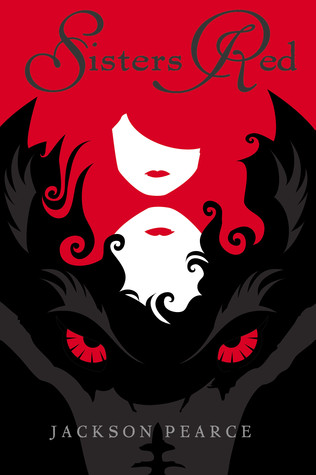
The cover of the copy I read.
Once upon a time when they were children, sisters Scarlett and Rosie March's live changed forever when their grandmother is killed by the legendary Fenris. This changes the two sisters irrevocably and turns them both into werewolf hunters. 

One of the things that I absolutely loved about this book was Scarlett and her sense of responsibility. Being one of the few people to know about the Fenris she sees hunting wolves as her duty to mankind. I admired this a lot because although I know that this is in a fantastical setting, personal responsibly is something that I am a believer in and was thrilled to see portrayed in a young adult novel. Having said that, she does have her flaws and her fear of abandonment leads her to act in a less than noble way towards her sister and best friend. This does, however, show that she is human. It made for a more well-rounded, more relatable character and made me like her even more.   

It was also great to see a comment on the predatory nature of men in such a novel as well. I very much felt that the wolves were a metaphor for rapists who prey upon and destroy vulnerable, yet beautiful women in the pursuit of power. The Fenris are always male and their victims always young, attractive women and I feel that even if this was not a deliberate feminist comment being made by the author it does show that there is something within the female psyche that tells them they have something to fear in the dark. I especially like how the wolves' action are never justified, that they are never portrayed as sympathetic characters. We feel pity for the people that they used to be, but once they are changed, Pearce makes the distinction between good and evil very clear. The magic of transformation from human to wolf is never really explored in any way that gives answers, but I got the feeling that wasn't the 'point' of the story and I was somewhat satisfied with that.

The way in which the narrative was told is also something that I liked and loved that I got the perspective of both sisters. Rosie is very different from Scarlett and has a distinctly different voice which I felt Pearce did well. The thing that I admired most in this character was her love for her sister. The internal battle that we get to witness in Rosie between the love for her sister and the need for her to find herself even in a world with Fenris felt, despite the fantasy aspect, to be genuine. Rosie is only 16 and this book reminded me of the challenges of being who you are when you're that age. I was very happy with the compromise that was made at the end of the book. 

Now, there were some problems that I had with this book. The first thing and the most off-putting was the dialogue. I found it very uncomfortable to read. It felt as though Pearce was trying too hard to make it sound like something that you would read in a book and not enough like something that someone would really say. I thought that it would get less jarring as I read on, but it still proved to be a problem for me even at the end of the book. 

The new cover
One of the other problems that I had was the plot was the predictability of it. I guessed about three chapters in the big thing that would be revealed to the sisters later on in the novel. I felt as though Pearce was a little too obvious with the hints that she was including and I think that young adults will be smart enough to get it. The Fenris being on Silas' doorstep was the thing that told me the plot twist and the less than subtle comments about Silas being the sixth son just hit me in the face with it. I just felt as though they were not necessary as the uncle had been introduced quite naturally and that would have been enough to lay the foundations for the uncle-brother situation. 

Despite these issues I did still enjoy this book. I felt as though the fairytale was dealt with very well and I loved the way that it had been modernised. I would also like to comment on the cover change that has occurred recently and say that I really like the direction that they have gone in with them. I know there are 3 other books in this series and I look forward to picking up the next one. 


Rating: 


Next in series: Sweetly

Should you decide not to read the book based on the film?

Today I went to see The Fault In Our Stars with my friends. This film was originally my suggestion as even though I hadn't read the book I had heard a lot about it. I knew that I wouldn't get around to reading the book before I saw the film and reasoning that the book is always better I decided that it wasn't such a problem. That is until I saw the film.

I know that it's about cancer and two teenagers falling in love and I fully expected to cry. However, I was never once moved to tears or even close. I left the cinema feeling completely devoid of emotion and not in the way that a film can leave you feeling numb because it has had such an impact on you. I just never believed in the scenario, I was never invested in the characters or the love story. 

Augustus Waters I found to be cocky and arrogant, yes, but from the outset it seemed to me that he was in fact just a scared little boy who was frightened to die. Well of course he was! That would have been fine if I didn't think that the film worked so hard to deny that. When Gus' cancer comes back with a vengeance and he loses his smart-Alec attitude I believed it. That was the moment that I was the most invested in the story, but it didn't last for very long. 

Hazel's eulogy to Gus, her original one, left me completely cold. From the first moment it seemed that Gus was determined that Hazel was going to be his girlfriend and I didn't like that. For me, it made everything that happened afterwards forced or shallow and not very organic. I can believe that they were best friends and so the grief is believable enough. I thought the eulogy that Hazel read out at the funeral was dishonest. The voice-over clearly states that she didn't believe a word and I think that's the problem with a lot of the gestures and statements made in the film: they were empty. 

The smoking 'metaphor' is also something that I just didn't get and thought was very pretentious. This coupled with all of the reasons above meant that I just didn't enjoy the film very much and was quite unmoved by it. However, that was just the film and I am sure that many fans of the book will be disappointed with the film as well. So I ask you, do I still keep this book on my mental TBR? 

Thursday, 24 July 2014

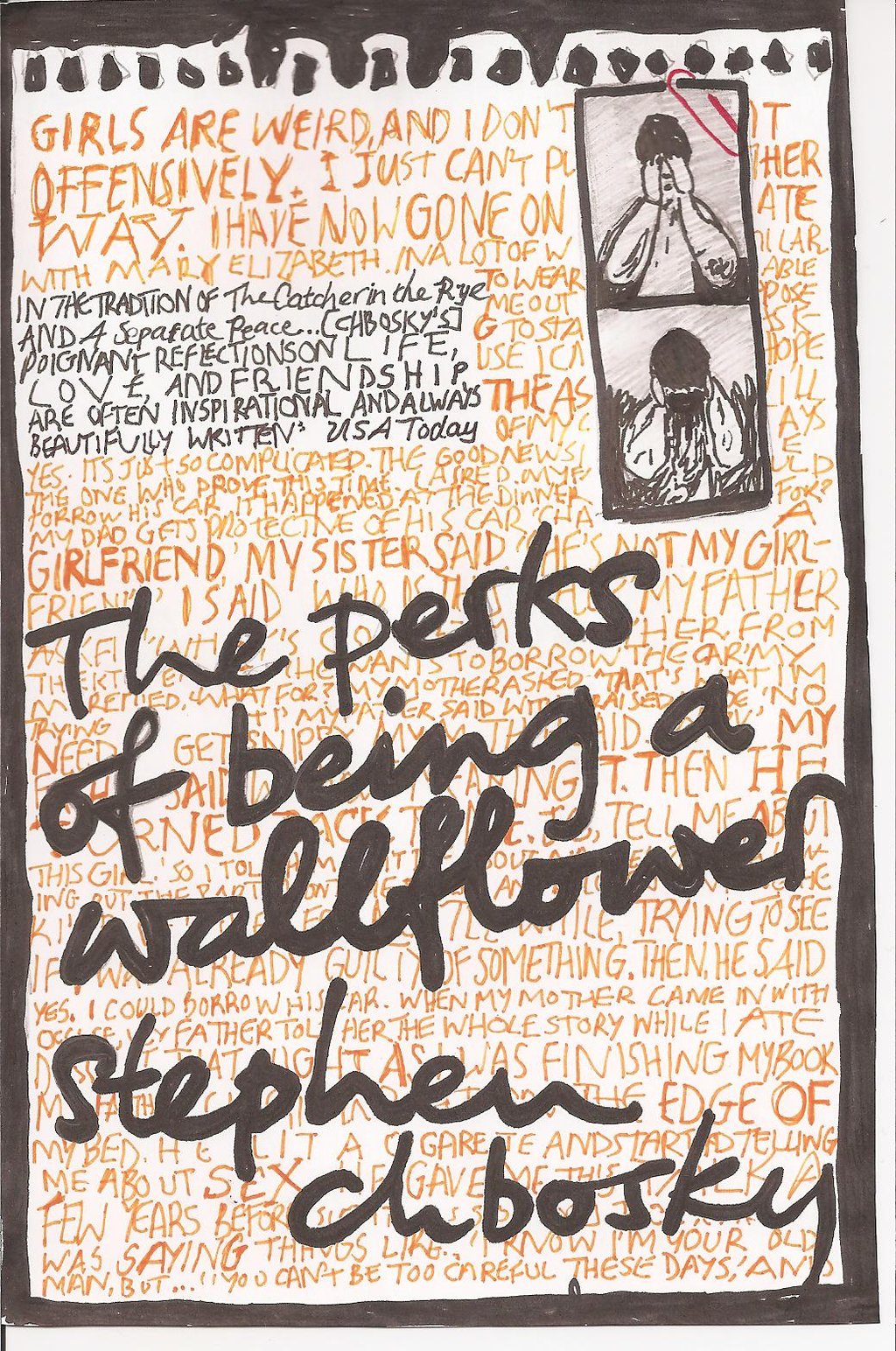
The Perks of Being a Wallflower by Stephen Chbowsky

What are the perks of being a wallflower? To be perfectly honest I'm not sure that there are any and I think that this is exactly the point that Chbosky's coming-of-age novel is trying to make. The story is about Charlie, a boy that is just starting high school. The narrative follows him through just one year at school and charts his journey through that trying time.

Charlie is a very sweet, naive and yet chillingly perceptive. His position as the 'wallflower' means that he is able to have great insights into the lives of his friends and family. However, the flip-side of this is that he spends so much time watching other people that he forgets to get involved. That is until he meets Patrick and Sam. These two are a lively step-brother and sister duo with an immense passion for Rocky Horror. 

I very much enjoyed the style that the books was written in. It is an epistolary novel which makes for a very intimate narrative as we are privy to all of Charlie's thoughts and feelings. One of the interesting things that I noticed was that Charlie never reveals who he is to the recipient of his letters. Why does Charlie want to remain anonymous? Surely the idea of a disclosure is that you tell all. Perhaps it is more effective to view Charlie's letters as a confession. In his letters he tells the reader everything he thinks that he shouldn't be thinking or feeling. He is very honest about his feelings for Mary Elizabeth and Sam and as a result we almost feel as though we are reading his diary.

This book concentrated quite heavily on forbidden relationships. Patrick and Brad, his sister and her boyfriend, Sam and Charlie, Mary-Elizabeth and Charlie, Aunt Helen and Charlie, Charlie and his English teacher Bill. This is significant because even though this is a YA novel it does not shy away from the harsh reality of abusive and inappropriate relationships. Charlie is surround by impropriety which adds to his sense of confusion and struggle to fit in. His relationship with Aunt Helen is harrowing in so many ways and the way in which it was revealed was absolute perfection.

In many ways this novel is very literary. The books that Charlie reads all have a big part to play in the narrative and his development as a character. Music is also very important to the book. Mix tapes are valuable currency in Charlie's world and much like the books he reads, music helps to shape who he becomes. Charlie's declaration that he feels 'infinite' is born out of hearing the perfect song at the perfect moment. That resonated quite strongly with me and suggests that there is something universal for Western teenagers in the experience of being a teenager.

This book was so much more than just another book about teenagers and really dug deep in an attempt to discover what that really means. At the end of the book I found myself wanting to be friends with Charlie so that I could see him grow and develop beyond the pages. I have since watched the film and loved it, though as always the book is better. Anyone who likes Sylvia Plath or Salinger will love this. I look forward to reading more from Stephen Chbowsky in the future and all that he has recommended.

Rating: 

Monday, 2 June 2014

Eleanor and Park by Rainbow Rowell

Eleanor & Park
This book is one that I had heard so many good things about and had been all over BookTube. Initually, when I had heard the premise I wasn't too impressed because it sound like another teen romance, albeit a really good one. When I saw it on a Kobo newsletter for just £1.49 I couldn't resist and just had to know what all the buzz was about.

Eleanor and Park is the story of first love. It follows the two main characters Eleanor who is a 16 year old woman from an abusive, deprived household who as a result suffers from low self-esteem and is ridiculed by the people at her school and more importantly the people on her school bus. Park is a half-Caucasian, half-Korean boy who suffers with identity issues and also happens to be next to the only spare seat on the school bus. During their travels too and from school Eleanor and Park develop a friendship that quickly blossoms into love. Whilst Eleanor is falling in love the situation at home also escalates and it is this that she is forced to battle with all time learning about who she is. 

The first thing that I thought about this book is that it was American. For some reason the cover art had given me the impression that this was a British romance. I was quite refreshed to find that Eleanor wasn't the normal 'ugly-pretty' girl that is often portrayed in these novels and in fact seems quite normal. Her body shape is described in a way that I can relate to. Her outlandish outfits which are unbeknownst to her classmates necessitated by the the family's lack of money and not a fashion statement, make her all the more loveable as the juxtaposition of her outward appearance to what's going on inside of her helps to emphasis that Eleanor is still struggling to understand who she is. 

Park was also refreshing as he wasn't the stereotypical love interest. His half-Asian ethnicity helps to steer him away from the all-American prototype as does the fact that he is a nice boy. Park is neither a rockstar nor a 'player' but just a normal teenage boy with hangups of his own. I also really admired his choice to wear eye-liner just because he wanted to. These two are a real gender-bending pair and I loved it. 

The treatment of domestic violence in this novel was surprisingly well dealt with. It was believable and seemed genuine to the plot and not just a device to make Eleanor vulnerable. Eleanor's step-dad Richie was deplorable as of course he is supposed to be, but was used sparingly the results being that when we did see him in the novel he was all the more frightening. 

Overall the book was very very good and is the perfect tale of what it is like to fall in love for the first time. My only issue with the book is that the ending is very unsatisfactory. It can be argued that that leaves room for us to imagine what might have happened and I like thinking about some scenarios, but all in all I feel as though there are too many unanswered questions. I suppose this is exactly the desired effect as I felt quite strongly that the end of the book was not in fact the end of Eleanor and Park. 

Rating: ★★★★

Saturday, 3 May 2014

Are You Ever 'Too Old' for Teenage Fiction?

Last year after a recommendation from For Bookssake I started reading my copy of Girls in Love by Jacqueline Wilson. I harboured this book for years having got it as part of a VHS bumper pack of the TV show ten years ago! I loved the show, but I never quite got around to reading the series back in the day. I had tackled Tracey Beaker and the Suitcase Kid, but was starting to believe that I was growing out of these kinds of books. What can I say? Reading books about 14-year-olds just wasn't cool when I was 15.

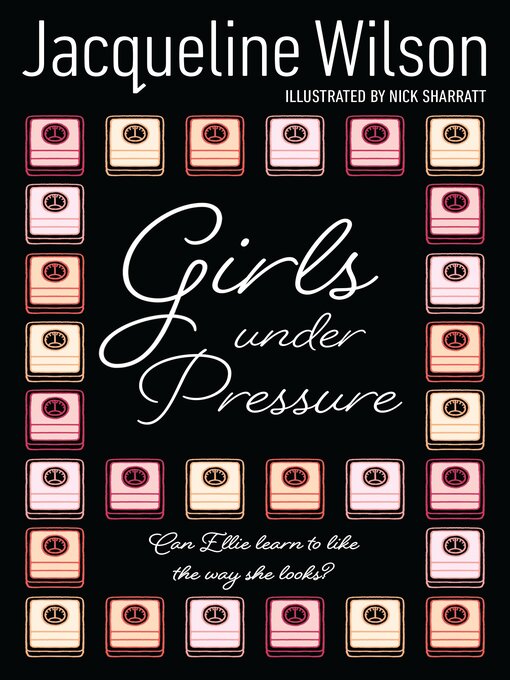
Last month I decided to tackle the second in the series: Girls Under Pressure. This is an incredibly relevant novel about the pressures that young girls go through in terms of the way they look and dress. In the book each girl tries to drastically change themselves in order to try and confirm to the idea of what they think everyone is telling them is acceptable for them to look like. Magda is sexually assaulted, blames herself and reacts badly by cutting off her hair and shunning her usually glamorous clothing. Nadine turns her back on her gothic look in order to try and fit in at a magazine photo shoot in the pursuit of a career in modelling. However, the series' protagonist Ellie has a particularly harrowing time as the belief that she is fat drives her to anorexia and bulimia. I was thrilled when at the end of the book all three of the girls found that they were just perfect as they were and it was an uplifting message to end on as pressure sadly doesn't disappear once you enter your twenties.

This got me thinking about how this book might appeal to adults and if teenage fiction still has relevance and value for adult readers. I think in the case of the girls series the answer must be a resounding yes. The problem is that we have a tendency to think about literature for younger readers as 'less' than literature for adults. Just look at the often dismissive and condescending way in which YA fiction is dealt with. I have to defend teenage and young adult fiction here because I believe that those labels can in fact be harmful. Let's be honest, 'adulthood' is no fixed thing and legally you become an 'adult' whilst still a 'teenager'. With this in mind it is easier to understand that books too aren't going to fit into neat categories nor are they going to stop being relatable just because you have another birthday.

The Girls series would have been really helpful when I was still a teenager, but it still does something for me now. So, are you ever 'too old' for teenager fiction? No because there is no such thing as 'teenage' fiction. Books are for everyone, everywhere and shouldn't be limited by how they were marketed. In addition to this, how can you be 'too old' when ages are just made up numbers? Age is arbitrary and we are all different which means that we will all want, need and be different things at different times. If I have learnt anything through writing this blog it's that with books, as with life, we should never limit ourselves and I think Ellie Allard would agree.