Showing posts with label Reviews. Show all posts

Sunday, 21 September 2014

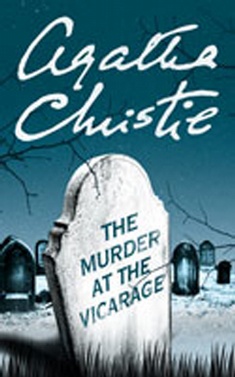
Murder at the Vicarage by Agatha Christie | Miss Marple #1

This was my first Agatha Christie novel and the first to feature her infamous Miss Marple. The title is incredibly shelf-explanatory and the plot centres around the murder of Colonel Pletheroe who is killed one afternoon whilst visiting his friend Reverend Clement ....

Something that I was struck by, and perhaps shouldn't have been considering the title of the books, was that story is narrated by the vicar himself. It made for an interesting perspective as I had expected the story to be told in the third person and so be second guessing everyone, but it was nice to have some certainty in an otherwise very uncertain text.

The plot was typical of Christie and made for some very cosy crime. I almost had the feeling that the book was perpetually trapped on a Sunday afternoon. Miss Marple herself did not play a starring role in the book, but I quite liked that we were getting a view of her from another's perspective. However, I would like to learn more about her and her history and hopefully in later books Christie goes into more depth about her main character.

I have to admit that I did not guess who the murderer(s) were and that was the greatest joy for me in this book as usually on murder mystery TV shows I quite often guess whodunnit early on. I have since watched the ITV adaptation of this book and found it to be incredibly obvious, but then I suppose I already knew and TV cannot allow for as many subtleties as a book. Horror and tragedy have never been my thing, but I think that Agatha Christie is definitely an author that can offer me a crime novel in an entertaining way.

One thing that I like about murder mysteries and Agatha Christie in particular is that you never quite feel that it's real. This may be because the 1930s feels far removed from 2014, but even then the characters seem to be quite hollow and for once in a book that is exactly what is needed. I doubt very much that I would be happy with being entertained by the death of another person, but in this instant it feels as though it is morally sound.


Tuesday, 19 August 2014

Stop What You're Doing and Read This!

No I'm not just being obnoxious I promise. This is in fact the name of a book that for obvious reasons caught my attention at the library a few days ago. I was browsing the 'literature' section just to see what they had and amongst the abundance of books on reading Shakespeare I found this. Stop What You're Doing and Read This! is a collection of essays written by a variety of different people invested in reading and put together by Vintage Books as a response to alarming news that thousands of children are not only turning away from reading, but literally can't read. 

The shocking state of children's literacy is a reality that I am faced with everyday as part of my job in school. Last year I was given a list of focus readers and was told that they were to take their SATS next year but are only at a KS1 reading level. Unfortunately, this was not unusual in the school I worked in, nor in the city, nor it seems in the whole of the UK.

This book aims to address this with ten essays by eleven authors that explore why reading is important. These range from figures such as Zadie Smith and Jeanette Winterson, to the founder of Virago Carmen Callil and founder of the Reader Organisation, Dr Jane Davis. Some of these essays addressed the issue better than others and as much as I enjoyed the range that the book had to offer, I think that some of the content needed to be rethought.

One of the things that I noticed when reading this book was that I wan't sure who the essays were written for. I have already mentioned that the book was published in response to poor literacy standards in the UK and at first I thought that this book was aimed at young adults who were disillusioned with reading, but towards the end I wasn't so sure. If it is the case that these essays are to encourage non-readers to read then I think that some of them went about it the wrong way. Tim Parks' essay 'Mindful Reading' was preachy and presumptive and made me not want to read. I was shocked to find it in this collection as many of the other essays were insightful and interesting.

That said, overall I enjoyed the reading the collection and got through it fairly quickly. I would encourage anyone engaged in the culture of reading to pick this book up and see what they think. It most definitely reinforced my belief that reading is incredible important and also reaffirmed reading's place in my careers aspirations. Also, I love the title! Stop what you're doing and read this! Genius.

Rating: 


Wednesday, 30 July 2014

The Wonderful Wizard of Oz by L. Frank Baum | Adventures in Oz #1

This is another of those children's books that I never read when I was a child. I suppose I thought that I had because I had watched the film a lot, but it seems that 'somewhere over the rainbow' isn't actually in the book. Though this is a pity as it is a brilliant song, I have to say that next to nothing disappointed me about this book.

The Wonderful Wizard of Oz tells the story of Dorothy and her dog Toto who are caught up in a tornado one day in their home of Kansas and transported to the magical world of Oz. During their landing into Oz the house that they were travelling in accidentally lands on the Wicked Witch of the East and kills her, much to the relief of the inhabitants.

The first thing that I noticed about this novel were the differences in plot from the 1939 film. The witch of the North is in fact quite an old lady, not the glamourpuss of the '39 film and the ruby slippers are silver! After realising both those things I quickly got rid of the picture of Judy Garland in my head and began to picture Dorothy as she was in the book: a child.

This book was actually quite dark for what I had expected of a children's story including several instances of murder and cruelty. There was a giant spider, rabid wolves, killer bees and enslaved flying monkeys! I liked that Baum didn't shiy away from things such as this in his book and fully embraces them. The feeling of genuine danger makes for a quick pace and great atmosphere. As a reader you feel as though that you don't know what is going to happen next which exactly what is needed from a good adventure.

I think the overall moral of the story, that the power is within you to achieve what ever it is that you want, whether it be feeling as though you have brains, a heart etc, is within you at all times was both engaging and uplifting. It was a very empowering message and one that I thought was demonstrated enormously well.

The theme of 'home' is also something that was explored well in this novel. Of course Dorothy wants to get back Kansas, but she isn't the only one looking to get home. It seems that everyone is searching for a place to belong or are looking to reclaim the place that they once called home. The way in which all of Dorothy's party all ended up finding a place of their own was very organic and at times quite subtle so that it isn't until the end that you realise it has all worked out for the best.

This book is where my knowledge of the Land of Oz ends, but knowing that there are 12 canonical texts makes me so happy. Unfortunately I don't have the second story in my possession nor does my local library have it so I'm bumping that one up to the top of my wish list.

Rating: 

Next in series: The Marvellous Land of Oz


Sabrina the Teenage Witch by David Cody Weiss and Bobbi JG Weiss | Sabrina the Teenage Witch #1


I remember growing up watching the sit-com Sabrina the Teenage Witch and whiling a whole summer not too long ago re-watching it.  Not to mention that I completely adored the films. At the time I did't realise that there was an entire series of novels based on the show, but was lucky enough to discover this when a friend was clearing out some of her stuff.

So now I am the proud owner of about 15 Sabrina novels, none of them consecutive. I don't really mind this much as I have watched the whole of the show and am treating the books like bonus episodes from several different seasons.

This is the very first one in the series and a book that I was aware I wasn't going to love. As a novelisation of of the TV series and of course the original movie, the book could only be a retelling of a story I already new quite well.

One of the problems that I had with the book was that it was like watching an episode, in fact the first three, only in slow motion as events were taking place much slower because I was reading. Normally this wouldn't be an issue, but I think that I was very aware that this is in fact a novelisation and not an original story or material in it's own right. If I'm perfectly honest I found it to be a little boring.

Having said that, the tone of the TV show came across in the book as did all of the humour. All of the characters sounded and acted very much like their TV counterparts and stories flowed quite well from one to the other. I accept this book for what it is and look forward to reading some of the others in the future. 

Rating: ★★

How I Lived On Just A Pound A Day by Kath Kelly


This is this story of Kath Kelly, who one night in a pub with her friends vows to live on a just a pound a day for an entire year. Kelly starts on this journey in order to buy her brother an amazing wedding gift, but what she learns along the way ends up being far more valuable than the money that she saves.

The first half of the this book was a lot like a homage to hitch hiking as Kelly used that method to travel everywhere, even across the channel in this way. This is also how Mark Boyle, the Moneyless Man went about travelling long distances for free and is something that seems very much still alive. I was a little frustrated at how much space this topic took up as it felt disproportionate to all of the other methods that she used in order to be frugal. Then again I suppose she did hitch hike an awful lot. 

Out of all of the frugality/green memoir style books that I have read, this is the most true to a retelling of events that I have come across. In some of the others there are hints and tips in order to replicate that kind of lifestyle, but Kelly is very honest in recounting what happened to her in that year. 

As I have become quite familiar with the ways in which people live for free, or very close to it, not a lot in this book was new to me. I did, however, enjoy seeing someone else taking part in it. Bristol seems to be quite a centre for this simpler lifestyle as Mark Boyle also set up home not too far away from there.

Her challenge may have started out as just a way to buy her brother and future sister-in-law a wedding gift which when I first realised this disappointed me, but I really am in no position to judge considering Kelly actually did it and I haven't. I think regardless of her reasons going into this, what she did was very admirable and very inspirational and I find myself even more convinced of the unimportance of money for living a good life.

Rating: 

Sunday, 27 July 2014

Sisters Red by Jackson Pearce | Retold Fairytales Series #1

6357708
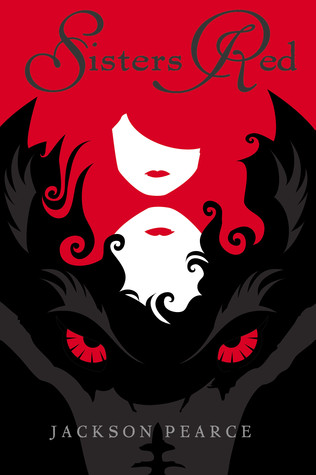
The cover of the copy I read.
Once upon a time when they were children, sisters Scarlett and Rosie March's live changed forever when their grandmother is killed by the legendary Fenris. This changes the two sisters irrevocably and turns them both into werewolf hunters. 

One of the things that I absolutely loved about this book was Scarlett and her sense of responsibility. Being one of the few people to know about the Fenris she sees hunting wolves as her duty to mankind. I admired this a lot because although I know that this is in a fantastical setting, personal responsibly is something that I am a believer in and was thrilled to see portrayed in a young adult novel. Having said that, she does have her flaws and her fear of abandonment leads her to act in a less than noble way towards her sister and best friend. This does, however, show that she is human. It made for a more well-rounded, more relatable character and made me like her even more.   

It was also great to see a comment on the predatory nature of men in such a novel as well. I very much felt that the wolves were a metaphor for rapists who prey upon and destroy vulnerable, yet beautiful women in the pursuit of power. The Fenris are always male and their victims always young, attractive women and I feel that even if this was not a deliberate feminist comment being made by the author it does show that there is something within the female psyche that tells them they have something to fear in the dark. I especially like how the wolves' action are never justified, that they are never portrayed as sympathetic characters. We feel pity for the people that they used to be, but once they are changed, Pearce makes the distinction between good and evil very clear. The magic of transformation from human to wolf is never really explored in any way that gives answers, but I got the feeling that wasn't the 'point' of the story and I was somewhat satisfied with that.

The way in which the narrative was told is also something that I liked and loved that I got the perspective of both sisters. Rosie is very different from Scarlett and has a distinctly different voice which I felt Pearce did well. The thing that I admired most in this character was her love for her sister. The internal battle that we get to witness in Rosie between the love for her sister and the need for her to find herself even in a world with Fenris felt, despite the fantasy aspect, to be genuine. Rosie is only 16 and this book reminded me of the challenges of being who you are when you're that age. I was very happy with the compromise that was made at the end of the book. 

Now, there were some problems that I had with this book. The first thing and the most off-putting was the dialogue. I found it very uncomfortable to read. It felt as though Pearce was trying too hard to make it sound like something that you would read in a book and not enough like something that someone would really say. I thought that it would get less jarring as I read on, but it still proved to be a problem for me even at the end of the book. 

The new cover
One of the other problems that I had was the plot was the predictability of it. I guessed about three chapters in the big thing that would be revealed to the sisters later on in the novel. I felt as though Pearce was a little too obvious with the hints that she was including and I think that young adults will be smart enough to get it. The Fenris being on Silas' doorstep was the thing that told me the plot twist and the less than subtle comments about Silas being the sixth son just hit me in the face with it. I just felt as though they were not necessary as the uncle had been introduced quite naturally and that would have been enough to lay the foundations for the uncle-brother situation. 

Despite these issues I did still enjoy this book. I felt as though the fairytale was dealt with very well and I loved the way that it had been modernised. I would also like to comment on the cover change that has occurred recently and say that I really like the direction that they have gone in with them. I know there are 3 other books in this series and I look forward to picking up the next one. 


Rating: 


Next in series: Sweetly

Bedknobs and Broomsticks by Mary Norton

When I was younger I remember watching the Disney film Bedknobs and Broomsticks with Angela Lansbury so many times that I could quote it word for word. I had no idea that it was in fact based on a book. I stumbled across that book whilst doing a stock check at the school library and vowed then and there to read it as soon as possible.

Mary Norton's book was originally published as two stories, The Magic Bed Knob (1943) and Bonfires and Broomsticks (1945). They began to be printed together in 1957. This is fairly obvious in the reprint that I read from, but it really wasn't a problem other than the second story took place a few years after the first one which surprised me a little. 

The book is very different from the film version and is not about three evacuees from London. This is the story of Carey, Charles and Paul who one day during their visit to their Aunt Beatrice meet a witch. One of the things that struck me straight away was how prominent the character of Carey was. In the film it is her brother Charles who is the one taking charge, but in the book it was very much the big sister Carey who took on that role. I was very pleased at this change because it was nice to see a brave and adventurous female character in a children's book. 

It surprised me to find that far from the Eastenders that film version portrayed the children to be, the family in the original novel are really quite posh. It makes perfect sense to me as who else goes to stay with their wealthy aunt other than the offspring of the well-to-do? I still prefer Disney's interpretation though.

That is really where the positive and the plain observations end. There were so many problems with this book that once I'd put it down I only picked it up again out of morbid curiosity. Miss Price was not the lovable witch that I imagined her to be. She comments at the beginning of the first story that she struggles to be wicked and thus showing that she wants to be! That I could cope with, but on top of this she just wasn't funny. In fact the whole book seemed to be devoid of humour.

In addition to this, one of the adventures that the children go on is a trip to the island of Ueepe. This is not the cartoon character inhabited island of the film, it is just a lovely South Pacific island. This I understood as it seemed perfectly reasonable to me that children want to visit the beach. The problems arise when the children and Miss Price are about to leave the island and are captured by cannibals. I found this part of the plot to be unimaginative and racist. Of all the troubles that could be encountered on an island, (and there are many as I discovered from On The Island) violent and barbaric indigenous people were not what I thought was appropriate or entertaining.

To be perfectly honest I was disappointed with the whole of the plot. The second of the stories was actually a better formed story than the first, but I still found the ending to be poor. Miss Price was, however, more likeable in the second of the two stories until she gives up her life to disappear into the 17th century with a man she barely knows. I lost all respect for her at that point, but this didn't matter much as it ended the novel. I suppose we should assume that Carey, Charles and Paul went on to live rather ordinary lives afterwards.

To sum up, I was very disappointed with this book for two main reasons. It had next to nothing in common with the film of my childhood. The second and most important of the reasons is that it was just a very boring book with a few characters that were quite unremarkable. I found it to be a chore to finish and not at all a joy to read.

Rating: 

Thursday, 24 July 2014

On the Island by Tracey Garvis Graves

This book tells the story of thirty-something-year-old Anna and almost seventeen-year-old T.J who after a freak accident are deserted on an uninhabited island. T.J is recovering from cancer and Anna is the person charged with tutoring him through the summer, but when they are forced together they become so much more than student and teacher. 

The premise for the story was promising and one of the most pleasing aspects of the book. The cover is stunning and really evocative of a desert island. It's interesting that the one thing that many people wish for in this story becomes Anna and T.J's nightmare. I really liked the way that the dangers of island life were represented. Throughout their time on the island the pair face thirst, malnutrition, sharks and even bats!

Not exactly a romantic setting, but they are exceptional circumstances and so draw the two characters closer to one another, developing a deep friendship and then eventually something more. The pace of this relationship is something that I felt was well done. All too often in romance novels characters become sexually involved very quickly. It took Anna and T.J two years to reach that that step, born out of genuine connection and not just insta-love. This was demonstrated further once the couple escaped from the island and settled back into life in the USA.

I particularly liked T.J and it was great to be able to get half the novel from his perspective. Perhaps it is because he is younger, but I found myself relating to him and his character more. The fast track growing up that he is forced to go through because of his cancer and then his experience on the island is portrayed well and sensitively. It is because of T.J's perspective that we really grasped the amount of time that has elapsed whilst they have been on the island as he is faced to accept that everyone else has moved on without him when he gets back. I love that he decides to reject what he is 'supposed' to do and instead follows his passion for construction and the outdoors.

On the other hand, Anna was a character that I found hard to connect with. I was never that invested in her story and found it even more difficult in the second half of the novel when she is back in Chicago. At the beginning of the book Anna is upset that her boyfriend doesn't want to get married and have children, the two things that she is desperate for. Towards the end of the book Anna is upset because she thinks her boyfriend is too young to get married and have children. At the very end of the novel Anna marries her boyfriend and has children. Anna's character changes very little of the course of the narrative and learns even less than that. I was frustrated by the constant talk about marriage and babies and found it to be far too in-your-face. Even after their rescue instead of being grateful for her rescue, her payout, her relationship with T.J and just generally being alive, Anna is consumed with thoughts of what she doesn't have. I found her character to be ungrateful, shallow and self-centred. Unfortunately, her perspective was half the book.

There were some great points to this novel and it does ask us to think about how we would react in a situation completely away from civilisation. Having said that the fact that the one half of this book was taken up by a character that caused nothing but frustration meant that I could never fully invest in it. It does, however, have a beautiful cover and is one that I spent a lot of time looking at.

Rating: 

Sense and Sensibility by Jane Austen | Lost in Austen

Sense and Sensibility was the first of Jane Austen's novels to be published and follows the Dashwood sisters, Elinor and Marinne, after the death of their father. As is characteristic of Austen's novels, the girls are mediocre when it comes to upper class society and impoverished thanks to the lack of genorosity of their half-brother and his wife. Necessity sees them relocated from their childhood home to a cottage on the grounds of a wealthy relation of their mother's. From this point on there are a series of events that see the sisters drifiting on the outer edges of engagements before finally ending up happily married and financially comfortable.

One of the biggest problems I had with this novel was the character of Marianne. I found her transformation from spoiled, silly childishness to stoic maturity hard to accept. Of course this book is set in a different time and teenagehood didn't exist, but is a broken heart really a cure for being vapid? I felt her decision to marry Colonel Brandon at the end of the novel was unrealistic even within the context of the plot. I understand that Austen wanted to tie up all the lose ends in order to make for a happy ending, but I think that even if Marianne  and Brandon had met and courted others and married them I would have found it more believable. Their story is hardly what I would call a romance. 

Elinor too frustrated me, but for different reasons. I found her self-sacrificing nature not to be the heroism that I assume Austen intended, but instead weakness of character. For all the faults with Marianne, her character is still passionate. That is of course because Marianne is the sensibility to Elinor's sense, a dichotomy that did very little for me. As the narrative is told mostly from the perspective of Elinor, as readers, we are privy to most of Elinor's thoughts and feelings. As a sister, daughter and friend she cannot be faulted in her ability to please others but in her role as a lover she fails miserably. Even through the veil of Regency honour and propriety Austen makes the connection between Edward Ferrars and Elinor very clear and I am disappointed that Elinor never so much as confides in her mother or sister. However, this romance is one that I believed and one that I found myself rooting for throughout the novel. If the novel had focused upon this couple I would have been perfectly satisfied with it. 

The redemption of Willoughby was something that I also felt dubious about. Even having finished the novel I am not sure that Willoughby is given redemption, but I do feel as though at least at the very end Austen attempts to induce sympathy for him. Willoughby for all intents and purposes is a 19th century gold digger, but is also a victim of a society that tells him that money dictates his worth as a human being (as are all the others). This is an example of the overall impression that I got from the novel, namely as a platform for Austen to attack the same idle classes and their shallow snobbishness that she herself belonged to. How can the rich and idle criticise the rich and idle? Certainly not in any way that I could take seriously.

Sadly my reading of this novel was coloured by many things that the book did just not overcome. It was coloured by my outrage at Austen's hypocrisy, my idea of what a romance is or should be and high expectations of a 'Jane Austen novel'. I was entirely underwhelmed and am happy to take at least some responsibility for that. Thankfully, my experience of this novel has not put me off Austen or any re-imaginings of Sense and Sensibility.

Rating: 

The Moneyless Man by Mark Boyle

The Moneyless ManHave you ever heard the saying 'money makes the world go round'? A lot of people in our society have probably not only heard it, but are evangelical believers. The truth is that my personal experience of modern day society is that money has become the dominant means of communication, relationships and security. Many people might be thinking that's just how it is, but back in 2008 ex-businessman Mark Boyle decided to challenge that idea and give up money for a year. This book is part memoir and part 'how-to' and follows his journey through the trials and tribulations of moneyless living. 

The truth is that the necessity of money is something that I have become endlessly fascinated with and ever since I can across Boyle's project several months ago, I haven't been able to get it out of my mind. Many people seem to be on board with the idea of slowing down and relying on money a bit less for the sake of necessity, but the idea that money is a completely arbitrary concept was like a revelation to me.

Throughout his year Boyle not only put on healthy weight, went on a trip to Ireland, attend several festivals and managed to throw two parties! If this isn't proof that we don't need money to live and have a good time then I don't know what it. I have taken on board several ideas from this book such as foraging and skill-sharing and was renewed with passion for a more frugal living having read this book.

Boyle has carried on his moneyless life and offers a range of free resources on his website here. Anyone wanting to slow down and pull out of consumerist living even a little should pick up this book. It was truly an inspiration.

Rating:  

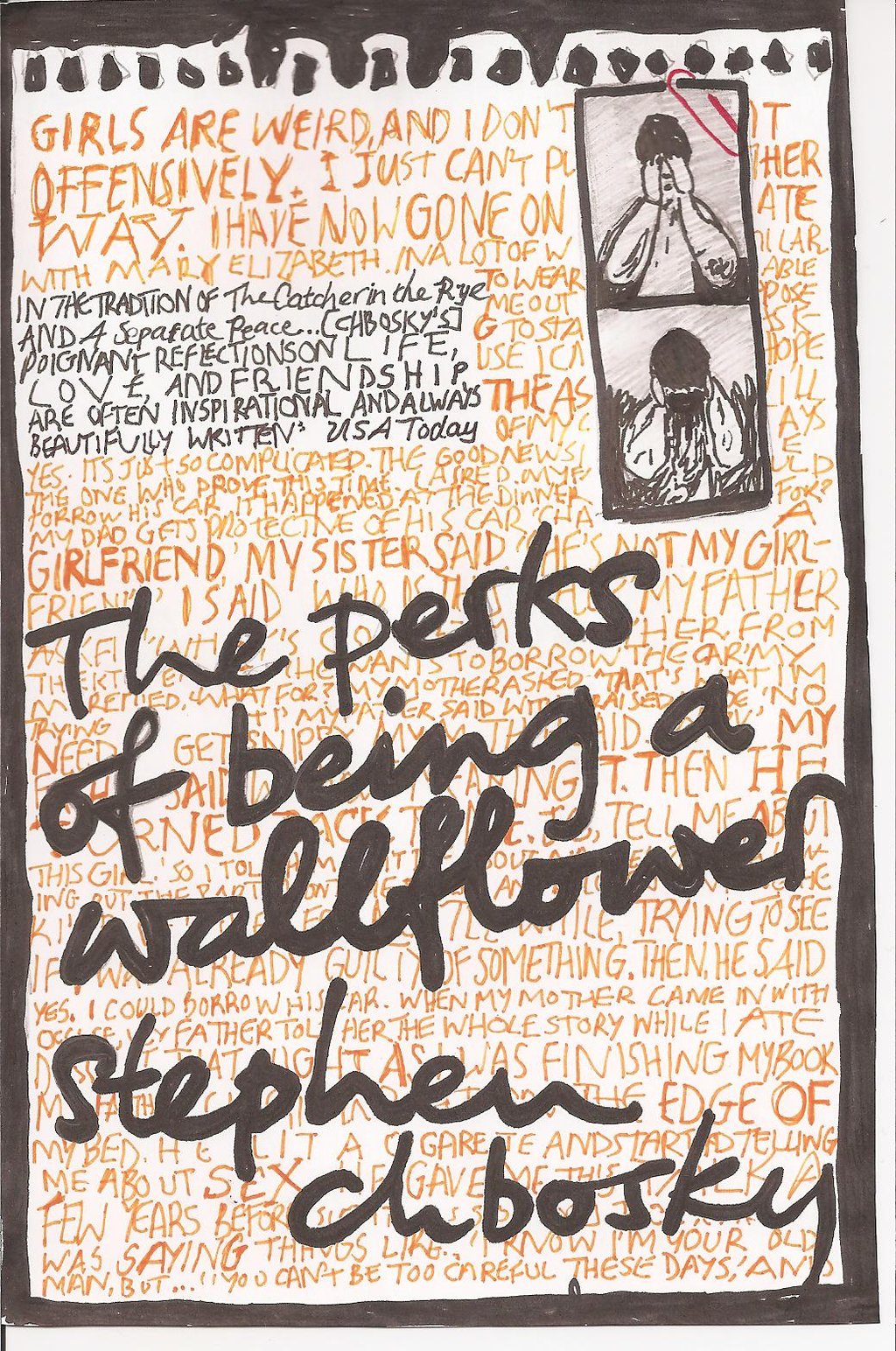
The Perks of Being a Wallflower by Stephen Chbowsky

What are the perks of being a wallflower? To be perfectly honest I'm not sure that there are any and I think that this is exactly the point that Chbosky's coming-of-age novel is trying to make. The story is about Charlie, a boy that is just starting high school. The narrative follows him through just one year at school and charts his journey through that trying time.

Charlie is a very sweet, naive and yet chillingly perceptive. His position as the 'wallflower' means that he is able to have great insights into the lives of his friends and family. However, the flip-side of this is that he spends so much time watching other people that he forgets to get involved. That is until he meets Patrick and Sam. These two are a lively step-brother and sister duo with an immense passion for Rocky Horror. 

I very much enjoyed the style that the books was written in. It is an epistolary novel which makes for a very intimate narrative as we are privy to all of Charlie's thoughts and feelings. One of the interesting things that I noticed was that Charlie never reveals who he is to the recipient of his letters. Why does Charlie want to remain anonymous? Surely the idea of a disclosure is that you tell all. Perhaps it is more effective to view Charlie's letters as a confession. In his letters he tells the reader everything he thinks that he shouldn't be thinking or feeling. He is very honest about his feelings for Mary Elizabeth and Sam and as a result we almost feel as though we are reading his diary.

This book concentrated quite heavily on forbidden relationships. Patrick and Brad, his sister and her boyfriend, Sam and Charlie, Mary-Elizabeth and Charlie, Aunt Helen and Charlie, Charlie and his English teacher Bill. This is significant because even though this is a YA novel it does not shy away from the harsh reality of abusive and inappropriate relationships. Charlie is surround by impropriety which adds to his sense of confusion and struggle to fit in. His relationship with Aunt Helen is harrowing in so many ways and the way in which it was revealed was absolute perfection.

In many ways this novel is very literary. The books that Charlie reads all have a big part to play in the narrative and his development as a character. Music is also very important to the book. Mix tapes are valuable currency in Charlie's world and much like the books he reads, music helps to shape who he becomes. Charlie's declaration that he feels 'infinite' is born out of hearing the perfect song at the perfect moment. That resonated quite strongly with me and suggests that there is something universal for Western teenagers in the experience of being a teenager.

This book was so much more than just another book about teenagers and really dug deep in an attempt to discover what that really means. At the end of the book I found myself wanting to be friends with Charlie so that I could see him grow and develop beyond the pages. I have since watched the film and loved it, though as always the book is better. Anyone who likes Sylvia Plath or Salinger will love this. I look forward to reading more from Stephen Chbowsky in the future and all that he has recommended.

Rating: 

Tuesday, 22 July 2014

The Secret Scripture by Sebastian Barry | The McNulty Family #2


This book was a pick out of my TBR jar and was something that I was lucky enough to come across on a book swap list. The story is told as a dual perspective, by protagonist Roseanne McNulty and her psychiatrist Dr Greene. Roseanne has been a patient at Roscommon mental hospital for 50 years when she decides to write an autobiographical account of her life. At the same time, Dr Greene is charged with the responsibility of deciding which patients are able to be integrated back into society when the hospitals imminent demolition is carried out. Greene becomes particularly fascinated by Roseanne and determines to uncover her story.

What is very apparent as the beginning of the novel and something that continues throughout it is the importance of this book being Irish. In so many ways, both tangible and not, the importance of Irishness permeates every corner of the story. The backdrop of this book is the political upheavals of Ireland and particularly Sligo in the 1920s and 30s which makes for a turbulent rhythm to the story. The narrative is incredibly successful in creating a feeling unease that inevitably comes with war. In many ways the book is a study of what it means to be home, where it is and how you know you belong there and poses the question of what it means to be Irish.

One of the major themes of this book is the dichotomy between truth and lies. What becomes apparent from the different perspectives in the book is that what is 'true' is not always as clear-cut as it might appear. There are several instances when Roseanne's account does not quite match up to the accounts that Dr Greene has gathered about her. In her testimony she talks about a time when her father taught her about gravity showing her a feather and a hammer dropping from a tower. In Fr Gaunt's account of this incident Roseanne's father is attacked and killed for his political allegiances being beaten with a hammer and his mouth stuffed with white feathers. Considering that Roseanne is in a mental hospital it might seem obvious to believe the priests account of events, but he knows the story only as hearsay and what's more by the time this revelation comes in the novel, as a reader, I had already grown to feel for Roseanne and her circumstances. For Roseanne, what is true is what she believes. 

A large part of this plot is what we might call a 'family saga'. Roseanne's life is very much like this as the narrative goes through the death of her father, marriage, divorce and childbirth. I liked this aspect of the novel for the most part but I did find the plot twist to be not much of a twist at all and in fact it was something that I predicted in the first quarter of the book. Perhaps this is due to a loose familiarity with the genre, but even still I found it a little cliché. The family saga aspect of the novel is added to when you realise that this book is in fact the second of the McNulty family series. In a recent trip to a second hand book shop I was fortunate enough to stumble across the first in the series: The Whereabouts of Eneas McNulty. I had no idea that this book fitted into a series and so I wouldn't say that it is necessary to read them in any kind of order or to read all of them at all. The Secret Scripture works perfectly well as a novel in it's own right and I enjoyed it as such.

I couldn't review this book without talking about the abuses of the mental health system. Roseanne's 'illness' is easily disputed once you learn the reason for her being entrusted to the state. Roseanne's is accused of being a nymphomaniac. As insulting as that is to my feminist sensibilities it does seem that the prejudices held by people and in particular the Catholic church at that time means that Roseanne's circumstances reflect the reality for real women of the time. She is not only a victim of a disgustingly patriarchal mental health system, but also the attention of a hateful and unforgiving priest. Fr Gaunt is instrumental in bringing about the worst events of Roseanne's life, from her divorce to her incarceration. Barry does not shy away from the failings of the church and the state to protect vulnerable women like Roseanne and instead uses Fr Gaunt as another tool in which to explore the nature of truth.

Fr Gaunt's actions and the less than compassionate way in which Roseanne was treated left a bitter feeling in my chest upon completion of the novel and this most of all prevents me from loving the book. It was most definitely worth reading and I would encourage anyone wanting to understand the troubles of Ireland in a less academic way to pick this book up. In terms of entertainment value, for me, the book had a moderate amount. I found myself far more interested in the stories of other people in the narrative, namely Eneas McNulty and even Fr Gaunt! I loved the character of Roseanne and it was her testimony that made the novel for me. Sadly, I wasn't that able to connect with Dr Greene leaving half of the book somewhat of a chore to read. Having said that I have come to enjoy the world that Barry has created and am excited delve into the other books in the series. 

Rating: ★★★

Previous in series: The Whereabouts of Eneas McNulty

Next in series: The Temporary Gentleman