Showing posts with label Literary Calendar. Show all posts

Friday, 30 January 2015

2014 was the year I learned …


To stop reading a book if I wasn’t enjoying it.
To use a TBR jar to keep my reading varied and exciting.
That I enjoy plays and graphic novels.
To accept that it’s ok for me not to like books.
To use my library again the way that I loved to when I was a child.
To accept that sometimes I just don’t have that much to say about a book.
That books can be talked about without reference to 20th century literary theorists.
To get over my ‘literary shame’.
That sometimes I don’t want to read and that’s ok.
That audio books are brilliant!
That I have enough books to read without buying more.
The pleasure of a good children’s book.
To be confident in my own tastes and opinions about books.
The joy of monitoring your reading.

Monday, 19 January 2015

Happy Winnie the Pooh Day 2015

So last year as part of the literary calendar I recognised Winnie the Pooh Day by reading the very first book in A.A. Milne’s series. I absolutely loved it and you can read all about that here.
This year in order to do the same thing I read the second book in the series House at Pooh Corner. This book introduces the much loved character of Tigger. That is much loved by everyone else. I sadly wasn’t too much of a fan.
One of the things that I absolutely loved about this second instalment is that it took me through the year in a series of adorable mishaps. The first story begins on a snowy day which was perfect as I was reading it on a snowy day. We worked our way through the year until eventually finishing up with my favourite season: Autumn.
As I hinted at earlier the introduction of Tigger in the second chapter of the collection was not something that I thought added much to the story. His appearance was sudden and unexplained and I find it difficult to understand what it was that he was adding. He appeared very young and was mostly definitely a confidante for Roo so perhaps he was there to appeal to the younger readers.
My favourite of all the stories has to be one near the end of the book that deals with the mystery of Christopher Robin and Backson. In the Disney adaptation of the books this is turned in to quite the misadventure which I really liked, but I also liked the quiet simplicity of the story in the book.
I didn’t get chance to throw a Pooh Bear tea party this year, but honey cakes and bear biscuits are definitely something that I am looking forward to with my next reading of Pooh and friends next year.


Happy Winnie the Pooh Day!

Sunday, 21 September 2014

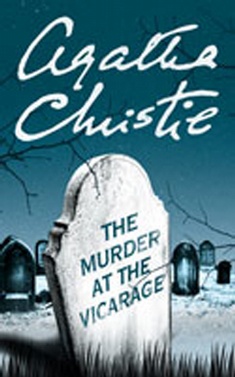
Murder at the Vicarage by Agatha Christie | Miss Marple #1

This was my first Agatha Christie novel and the first to feature her infamous Miss Marple. The title is incredibly shelf-explanatory and the plot centres around the murder of Colonel Pletheroe who is killed one afternoon whilst visiting his friend Reverend Clement ....

Something that I was struck by, and perhaps shouldn't have been considering the title of the books, was that story is narrated by the vicar himself. It made for an interesting perspective as I had expected the story to be told in the third person and so be second guessing everyone, but it was nice to have some certainty in an otherwise very uncertain text.

The plot was typical of Christie and made for some very cosy crime. I almost had the feeling that the book was perpetually trapped on a Sunday afternoon. Miss Marple herself did not play a starring role in the book, but I quite liked that we were getting a view of her from another's perspective. However, I would like to learn more about her and her history and hopefully in later books Christie goes into more depth about her main character.

I have to admit that I did not guess who the murderer(s) were and that was the greatest joy for me in this book as usually on murder mystery TV shows I quite often guess whodunnit early on. I have since watched the ITV adaptation of this book and found it to be incredibly obvious, but then I suppose I already knew and TV cannot allow for as many subtleties as a book. Horror and tragedy have never been my thing, but I think that Agatha Christie is definitely an author that can offer me a crime novel in an entertaining way.

One thing that I like about murder mysteries and Agatha Christie in particular is that you never quite feel that it's real. This may be because the 1930s feels far removed from 2014, but even then the characters seem to be quite hollow and for once in a book that is exactly what is needed. I doubt very much that I would be happy with being entertained by the death of another person, but in this instant it feels as though it is morally sound.

★★★★

Saturday, 13 September 2014

Matilda by Roald Dahl

When I was growing up Matilda was one of my favourite films and I don't think that as a child I had any awareness that it was in fact a book. As I grew older this is something that I became very much aware of and am surprised that it has taken until now to read it!

As with so many of the children's books that I have read this year the film version has been very much in my mind and so the shock of the differences between the two are always the thing that I am confronted with first. I was pleasantly surprised to realise that this book is very much British and I was completely enchanted with the quaint English village setting of the novel.

Matilda was charming and endearing throughout the whole of the novel and appeared in the prose so much younger than the actor who portrayed her in the film, as of course she was. The thing that struck me most was that even though she was 4 years old she was still relatable! Driven by a passion for learning and incensed by injustice Matilda reminded me of myself or at the least the best version of myself. The talent is clear in Dahl's ability to make a twenty year age difference seem like barely nothing or perhaps it's that I'm still a child at heart.

As is expected in a Dahl novel the adult characters were mean and horrid and yet recognisable in adults that we remember from our own childhood. There is some dark content in the book after all Matilda is consistently emotionally abused by her family. Not to mention the physical abuse that we read was inflicted on Miss Honey as a child and indeed the children at the school where Miss Trunchbull is Headmistress. If those aren't dark enough themes Dahl even suggests that Trunchbull is a murderer! This one of the most important points of praise for Dahl in my opinion as he doesn't shy away from issues that really effect children or hide them from the children themselves. These are after all children's books are most definitely subject matter that should be presented to children in a though-provoking way.

Roald Dahl books are still popular among children today and this story just helped me to realise why. The long-lasting popularity had been earned in my opinion and despite there being a darker side to Roald Dahl, he is a master of entertaining children with his writing. 

Rating: ★★★★

Monday, 28 April 2014

World Book Night 2014

As any book connoisseur will know it was World Book Night last Wednesday and as part of a personal challenge to implement ten traditions in the next 12 months, my partner and I started what we hope will be our annual World Book Night Book Swap.

The aim with the book swap is to share our love of a book that we have read and loved in the past year and get the other person to read it within that month. In the future we are hoping that our choices will be a secret until they are presented on that day, but this year excitement got the better of me and we told each other long before the day.

My choice for him was Aldous Huxley's Brave New World which I read last year for a university module. I bought him Oryx and Crake by Margaret Atwood for his birthday last month and he loved the dystopian genre which really sealed my choice.

His choice for me was the Russian classic The Master and Margarita by Mikhail Bulgakov. The inspiration behind this choice was that he is a great lover of Russian literature and this is one that he has enjoyed most recently. I am very excited to read my first piece of Russian fiction and look forward to reading one of the classics. We will do reviews for both of these books closer to the end of the month when we have both completed them.

Saturday, 8 March 2014

Happy International Women's Day 2014


In celebration of International Women's Day today and for the rest of March I have decided to do a blog post that explores the relationship between the books that I read and my feminist beliefs. The first thing to do then is to explain what it is I mean when I say feminism. 


This is a lot more difficult than I first realised as I came to write this up because previously my definition has consisted of the simple notion of someone who believes that all genders are equal. It was only when I began to elaborate that I realised that this was not in fact that simple after all.  

I believe that feminism must be intersectional. That is to say that it must recognise, appreciate and even support other types of oppression. This led on from a conversation that I had with a friend last year where I discovered that she is in favour of women’s rights and LGBT rights, but refused to acknowledge middle-class privilege and the oppression of the working class. This was very unsettling for me because up until this point I had assumed that feminists were socialists. However, after a superficial look at the different forms of feminism I came to see that actually there were many different types of feminist who disagree with me on many different issues and actually ‘feminism’ seems to be an umbrella term for anything to do with the appreciation and respect of women. This is absolutely right! 

Despite this, however, I feel that it does not go far enough. Putting aside my belief that gender itself is a construct and completely and utterly arbitrary, my views on equality are also something that need to be further explored in order to truly understand how it is that I define ‘feminism’. The relevance of the following questions has never been so important: equal to what, equal how and equal to whom? This is where the intersectional aspect of feminism comes back into play because working-class women, black women and non-Western women (to name a few) do not have the same experiences of womanhood. Therefore, what I mean by ‘equal’ cannot simply mean the same rights and privileges as men because what kind of ‘man’ are we talking about? White men? British men? Gay men? All of these? None of these? Feminism for many may mean the advocacy of women's rights on the grounds of political, social, and economic equality to men, but for me it means the eradication of privilege.


What impact does this then have on my relationship with books?
  • I take an interest in books about women and female protagonists. 
  • I actively choose to read women authors, particularly LGBT women, women of colour and the Global South.
  • I struggle to connect with male-centric narratives.
  • I look for and enjoy books explicitly about feminism. 
  • I can struggle with power relationships in romantic comedy and romance novels and especially contemporary New Adult novels. 
  • How feminist-friendly a book is can fundamentally impact how much I enjoy it. 
  • The feminist credentials of an author can bump a book up on my wish list. 
Many people might say that this means that I am in fact discriminating against male authors and male protagonists, but I reject this because I believe that the literary world (and the world) are already in favour of men and uses them as the default. As a result of this it is easy for people to in their reading habits to bypass books about and by women. Looking back on the majority of my compulsory reading throughout my education, even at university it is clear patriarchy still prevails. It is not my intention to never again read a book written by a man (men can be feminists too!), but to find a sense of equality in what it is that I do read. 

Saturday, 18 January 2014

Happy Winnie the Pooh Day 2014!

Today is the birthday of Winnie the Pooh author A.A Milne. This means that every year this day is celebrated as Winnie the Pooh Day and this year I decided to jump on the band wagon! A.A. Milne, who was born in 1882, based his stories about Pooh on his son's stuffed animals and even incorporated Christopher Robin into the stories by making him a key character. I was very surprised to learn that Milne studied Maths at Cambridge. I suppose this just goes to show that mathematicians do have imagination! 

Winnie the Pooh was first published on 14th October 1926 so is definitely a children's classic. Last week I read and completed Milne's first Pooh book Winnie the Pooh and next I will be starting House at Pooh Corner. This is a series that I never picked up when I was younger and one that I regret not having read until now because they really do deserve to be as popular as they are.

One of the things that I noticed when reading the book is that it makes no attempt to hide the fact that it is a father making up stories about his son's toys. I liked that it was that honest. I liked that the narrator could be heard when you were reading. I also liked that every so often Christopher Robin would interject and ask questions of the story which made it so much more interactive. This form also helped to make the stories feel intimate and personal. Even though I was often reading them on a busy train, I felt as though I was sitting in front of a warm fire with tea and biscuits. 

I was very shocked to realise that Tigger is not in the first book! When I was growing up it was always Pooh and Tigger and I never really looked too much at characters like Owl and Rabbit. I also don't think that I appreciated how reasonable Eeyore's gloominess is. In all of the stories from the first book I see Eeyore as having genuine reasons for being sad and the poor thing seems to be a victim of some genuine misfortune. In chapter four Eeyore loses his tail which is a part of him! At the beginning of chapter six he is sad because no one has remembered his birthday and in chapter eight his offer of help is completely ignored. I found myself feeling very sorry for Eeyore a lot of the time and I know that he probably doesn't get any happier, but I really whish he would! Maybe in the final book everyone's favourite donkey can have a happy ending. 


I borrowed my copy of this book from the library and I have to to say that it is incredibly beautiful. All of the pictures that are in this post are photographs that I took of the illustrations which were drawn by Ernest H. Shepard. They are simple and evocative and childlike in the best sense of that word. The book had a heart-warming quality that meant even though the stories were simple they brought a smile to your face and the illustrations were a perfect compliment to that. I look forward to the next installment of Pooh and will buying my nieces and nephews a copy of these as soon as they are able to read!

Rating: ★★★★