Showing posts with label Society Politics and Philosophy. Show all posts

Tuesday, 19 August 2014

Stop What You're Doing and Read This!

No I'm not just being obnoxious I promise. This is in fact the name of a book that for obvious reasons caught my attention at the library a few days ago. I was browsing the 'literature' section just to see what they had and amongst the abundance of books on reading Shakespeare I found this. Stop What You're Doing and Read This! is a collection of essays written by a variety of different people invested in reading and put together by Vintage Books as a response to alarming news that thousands of children are not only turning away from reading, but literally can't read. 

The shocking state of children's literacy is a reality that I am faced with everyday as part of my job in school. Last year I was given a list of focus readers and was told that they were to take their SATS next year but are only at a KS1 reading level. Unfortunately, this was not unusual in the school I worked in, nor in the city, nor it seems in the whole of the UK.

This book aims to address this with ten essays by eleven authors that explore why reading is important. These range from figures such as Zadie Smith and Jeanette Winterson, to the founder of Virago Carmen Callil and founder of the Reader Organisation, Dr Jane Davis. Some of these essays addressed the issue better than others and as much as I enjoyed the range that the book had to offer, I think that some of the content needed to be rethought.

One of the things that I noticed when reading this book was that I wan't sure who the essays were written for. I have already mentioned that the book was published in response to poor literacy standards in the UK and at first I thought that this book was aimed at young adults who were disillusioned with reading, but towards the end I wasn't so sure. If it is the case that these essays are to encourage non-readers to read then I think that some of them went about it the wrong way. Tim Parks' essay 'Mindful Reading' was preachy and presumptive and made me not want to read. I was shocked to find it in this collection as many of the other essays were insightful and interesting.

That said, overall I enjoyed the reading the collection and got through it fairly quickly. I would encourage anyone engaged in the culture of reading to pick this book up and see what they think. It most definitely reinforced my belief that reading is incredible important and also reaffirmed reading's place in my careers aspirations. Also, I love the title! Stop what you're doing and read this! Genius.

Rating: 


Wednesday, 30 July 2014

How I Lived On Just A Pound A Day by Kath Kelly


This is this story of Kath Kelly, who one night in a pub with her friends vows to live on a just a pound a day for an entire year. Kelly starts on this journey in order to buy her brother an amazing wedding gift, but what she learns along the way ends up being far more valuable than the money that she saves.

The first half of the this book was a lot like a homage to hitch hiking as Kelly used that method to travel everywhere, even across the channel in this way. This is also how Mark Boyle, the Moneyless Man went about travelling long distances for free and is something that seems very much still alive. I was a little frustrated at how much space this topic took up as it felt disproportionate to all of the other methods that she used in order to be frugal. Then again I suppose she did hitch hike an awful lot. 

Out of all of the frugality/green memoir style books that I have read, this is the most true to a retelling of events that I have come across. In some of the others there are hints and tips in order to replicate that kind of lifestyle, but Kelly is very honest in recounting what happened to her in that year. 

As I have become quite familiar with the ways in which people live for free, or very close to it, not a lot in this book was new to me. I did, however, enjoy seeing someone else taking part in it. Bristol seems to be quite a centre for this simpler lifestyle as Mark Boyle also set up home not too far away from there.

Her challenge may have started out as just a way to buy her brother and future sister-in-law a wedding gift which when I first realised this disappointed me, but I really am in no position to judge considering Kelly actually did it and I haven't. I think regardless of her reasons going into this, what she did was very admirable and very inspirational and I find myself even more convinced of the unimportance of money for living a good life.

Rating: 

Sunday, 27 July 2014

The Happiness Project by Gretchen Ruben

The title of this book might be quite off-putting and dismissed as American pyschobabble to many of the British public. When I first came across this book my reaction was much the same,  but months after I first read about it on a bad day after a series of bad days, I decided to reserve this book on the online library system. Why? Because who doesn't want to be happier? The book is Ruben's memoir following a year in her life where she implements tasks and resolutions for herself in order see if she can in fact make herself happy. The fact that this book has been published means that Ruben did find herself being happier and there might even be hope for me.


I liked the style of this book. The memoir that follows someone in a set amount of time (usually a year) is a genre that I have become very familiar with and very fond of over the last few months. Ruben even comments in one of her chapters that she is part of a new trend called 'method journalism'. I now have a name for my new genre obsession. 

Ruben was open and honest about her short-comings and failures throughout the year and sometimes offered more of an insight into her marriage and parenting than I was comfortable with but I see how this might be useful to other readers. The tasks that she set for herself were often so small that it is easy to see how people forget about them in everyday life, for instance laughing and having good manners. What becomes clearer in the second half of the book is that happier people are usually better people and vice versa, though the reverse is not so shocking.

This would be a great book for almost anyone because it will appeal to those (like me) who just want to challenge themselves to be happier with all that they are blessed with and it will be useful to the sceptics because it doesn't ask anything of you. This book pops up in the 'self-help' category, something I'm entirely in agreement with, but unlike so many self-help books doesn't ask you the reader to do any of the things that Ruben is doing, it is merely telling you about them. Since the publication of the book Ruben has started a little empire of self-help encouraging others to start their own happiness projects for which she charges which I find to be ethically dubious. The book, however, has none of that feel about it and I genuine believe that Ruben underwent this project to change her own life and not start an enterprise from it and as a result this book as a stand alone thing keeps it's integrity.

Rating: ★★★

Thursday, 24 July 2014

The Moneyless Man by Mark Boyle

The Moneyless ManHave you ever heard the saying 'money makes the world go round'? A lot of people in our society have probably not only heard it, but are evangelical believers. The truth is that my personal experience of modern day society is that money has become the dominant means of communication, relationships and security. Many people might be thinking that's just how it is, but back in 2008 ex-businessman Mark Boyle decided to challenge that idea and give up money for a year. This book is part memoir and part 'how-to' and follows his journey through the trials and tribulations of moneyless living. 

The truth is that the necessity of money is something that I have become endlessly fascinated with and ever since I can across Boyle's project several months ago, I haven't been able to get it out of my mind. Many people seem to be on board with the idea of slowing down and relying on money a bit less for the sake of necessity, but the idea that money is a completely arbitrary concept was like a revelation to me.

Throughout his year Boyle not only put on healthy weight, went on a trip to Ireland, attend several festivals and managed to throw two parties! If this isn't proof that we don't need money to live and have a good time then I don't know what it. I have taken on board several ideas from this book such as foraging and skill-sharing and was renewed with passion for a more frugal living having read this book.

Boyle has carried on his moneyless life and offers a range of free resources on his website here. Anyone wanting to slow down and pull out of consumerist living even a little should pick up this book. It was truly an inspiration.

Rating:  

Saturday, 3 May 2014

Are You Ever 'Too Old' for Teenage Fiction?

Last year after a recommendation from For Bookssake I started reading my copy of Girls in Love by Jacqueline Wilson. I harboured this book for years having got it as part of a VHS bumper pack of the TV show ten years ago! I loved the show, but I never quite got around to reading the series back in the day. I had tackled Tracey Beaker and the Suitcase Kid, but was starting to believe that I was growing out of these kinds of books. What can I say? Reading books about 14-year-olds just wasn't cool when I was 15.

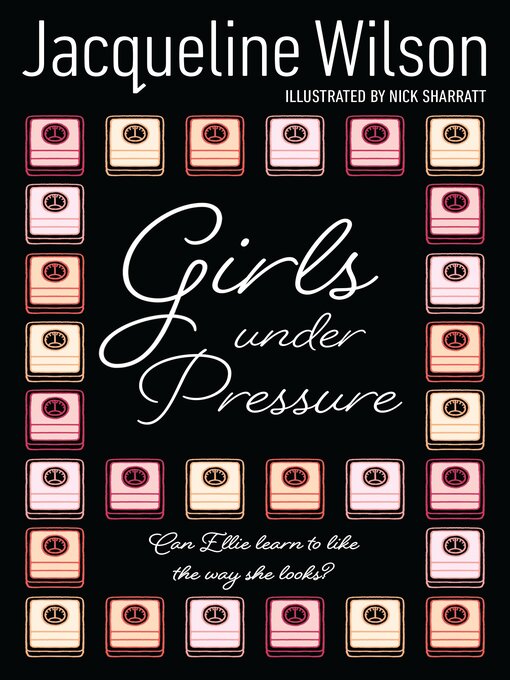
Last month I decided to tackle the second in the series: Girls Under Pressure. This is an incredibly relevant novel about the pressures that young girls go through in terms of the way they look and dress. In the book each girl tries to drastically change themselves in order to try and confirm to the idea of what they think everyone is telling them is acceptable for them to look like. Magda is sexually assaulted, blames herself and reacts badly by cutting off her hair and shunning her usually glamorous clothing. Nadine turns her back on her gothic look in order to try and fit in at a magazine photo shoot in the pursuit of a career in modelling. However, the series' protagonist Ellie has a particularly harrowing time as the belief that she is fat drives her to anorexia and bulimia. I was thrilled when at the end of the book all three of the girls found that they were just perfect as they were and it was an uplifting message to end on as pressure sadly doesn't disappear once you enter your twenties.

This got me thinking about how this book might appeal to adults and if teenage fiction still has relevance and value for adult readers. I think in the case of the girls series the answer must be a resounding yes. The problem is that we have a tendency to think about literature for younger readers as 'less' than literature for adults. Just look at the often dismissive and condescending way in which YA fiction is dealt with. I have to defend teenage and young adult fiction here because I believe that those labels can in fact be harmful. Let's be honest, 'adulthood' is no fixed thing and legally you become an 'adult' whilst still a 'teenager'. With this in mind it is easier to understand that books too aren't going to fit into neat categories nor are they going to stop being relatable just because you have another birthday.

The Girls series would have been really helpful when I was still a teenager, but it still does something for me now. So, are you ever 'too old' for teenager fiction? No because there is no such thing as 'teenage' fiction. Books are for everyone, everywhere and shouldn't be limited by how they were marketed. In addition to this, how can you be 'too old' when ages are just made up numbers? Age is arbitrary and we are all different which means that we will all want, need and be different things at different times. If I have learnt anything through writing this blog it's that with books, as with life, we should never limit ourselves and I think Ellie Allard would agree. 

Monday, 28 April 2014

Shopped by Joanne Blytham


This is a very detailed study of the evils and exploitations of the supermarkets. It goes through a number of ways in which supermarkets have infiltrated not only our towns, cities and high streets, but also the very way in which we think about food and food shopping.


I started this book before I had heard of Ruth Stokes' and her Armchair Activists Handbook and I found that they complimented each other perfectly. Blytham's book is exhaustive in it's exploration of the impact of supermarkets, but fails to offer any suggestions for change or resistance. Perhaps Blytham assumes that we will all find it obvious that we should find alternatives as Ruth Stokes does but the tone of the book can often be defeatist. The anecdotes from farmers and suppliers seem hopeless and there seems little hope of government legislation reversing the impact that supermarkets have already had.

The book was researched and written some time ago and now therefore many of Blytham's points are much like predictions. An example of this is her concern that the supermarkets are getting around town planning by refurbishing empty lots on the high street which has absolutely come true. In fact I now see Tesco Express and Metro or Sainsbury's Local far more than I see full-sized stores.

The book was enlightening and has steeled me in my resolve to find alternative ways to shop. However, at times was quite repetitive and by half way through I felt as though I had the point and understood the implications. Many of the subjects tackled in each chapter over-lapped in content this meant that the repetitive nature was emphasised.

My favourite bit of information I learned and the one thing that I was surprised to find is that supermarkets actually work to limit our choice, variety and flavour expectations. I was horrified to find that I have never had the opportunity to taste literally hundreds of different fruits and vegetables because supermarkets have refused to stock them. This in itself is bad enough, but this has led to a horrifying decrease in the growth and production of these varieties. Artisan bread may be one thing, but artisan farmers, even artisan vegetables?

This book is nothing less than an incitement to action and it would be a better world were all consumers to read it.

Rating: ★★★

Monday, 10 March 2014

The Armchair Activist's Handbook by Ruth Stokes

When I first came across a review of this book on the For Books' Sake blog I was immediately attracted by it's title. Being an activist is a big part of my life and I like to feel like I'm standing up and saying no to the unethical practises that I see going on around me, but traditional activism has always been a dangerous avenue for me as sit-ins and marches can sometimes lead to arrests and as I love my job working with children this is something that I am not willing to risk. Stokes' book offers more peaceful, everyday alternatives and are things that can easily be implemented by almost everyone.


Buying this book was a hard decision right from the beginning as the only way that I could purchase it was as an ebook on the Amazon website. I have been boycotting Amazon for their questionable ethical conduct for just under 6 months now, but after weighing up the impact of buying this one book (costing £1.59) against all that I could learn about moral living I decided to grit my teeth and go for it.

I'm glad that I decided to make the concession and purchase it as a picked numerous ideas about how I could tweak my life in order to be better to the environment, to other people and to my local community. Here is a quick overview of the tips that I picked up:


  • Forage for food eg. nettles etc.
  • Use veg box schemes
  • Use local butchers and bakers
  • Shop at independent shops
  • Use Asian grocers as alternatives when necessary
  • Swap seeds
  • Join local energy schemes
  • Research boycotts
  • Write to retailers/MPs about boycotts
  • Create 'green' spaces
  • Shop for ethical clothing
  • Go to swap shops 
  • Buy second hand
  • Rent don't own a car
  • Cycle
  • Transfer to Credit Union
  • Use a Building Society or Post Office instead of banks

These are just the main ideas that I picked up and wanted to start doing in my life as soon as possible, but there are plenty more that others might pick up on. As a book it is very well structured with each chapter focusing on a different issue which makes it very easy to dip in and out of. In addition to this I have now also discovered Stokes' wonderful journalism which can be found here.  At times I did find it to be a bit too anecdotal in tone which confused some of the chapters as Stokes' journey to activism was happening simultaneously, but this is a minor complaint. Overall I felt that this book was a very good read and very useful.

Rating: 

Saturday, 8 March 2014

We Day UK 2014

On Friday 7th March I attended the very first We Day UK. We Day is a celebratory concert put on by the charity Free the Children, which I have the great pleasure of working in collaboration with as part of my role in school. Free the Children is a charity that works to empower young people to make a change in their local and global community and encourages everyone to be a 'student of the world'. The charity began it's life in Canada and is in it's fourth year here in the UK. The concert itself was wonderful and videos can be found on the Free the Children YouTube channel. This is their general We Day video:


I know that it is very North American and idealistic and full of rhetoric, but it is quite powerful as was the show, but what does all this have to do with my library? Well everyone who attended the event received a free gift bag and inside that gift bag was a free book! Free the Children is an international bestseller and is the story that launched the Free the Children movement. It tells the story of the 12 year old co-founder Craig Kielburger discovering the realities of child labour and his journey to experiencing these conditions first-hand. There were several things that were particularly fabulous about this book besides the fact that it is part of such an incredible cause and was free. 

Firstly, is that it is part of the 'Buy a book, Give a book' initiative which means that for every book purchased a notebook will be given to a child in order to help them with their education. Now as I have already said I didn't pay for the book, but the sponsors did and so hundreds of notebooks should soon be finding their way to children all over the world. 

The second thing that is wonderful about this book is that it is made from post-consumer recycled paper. This means that the paper used to make this book would otherwise have just been waste and so the book gets a big tick on it's green credentials too.

I am incredibly excited to read this book and learn more about the true reality of 'fast fashion'. The book can be purchased on the Free the Children Me to We shop along with other ethical products.